
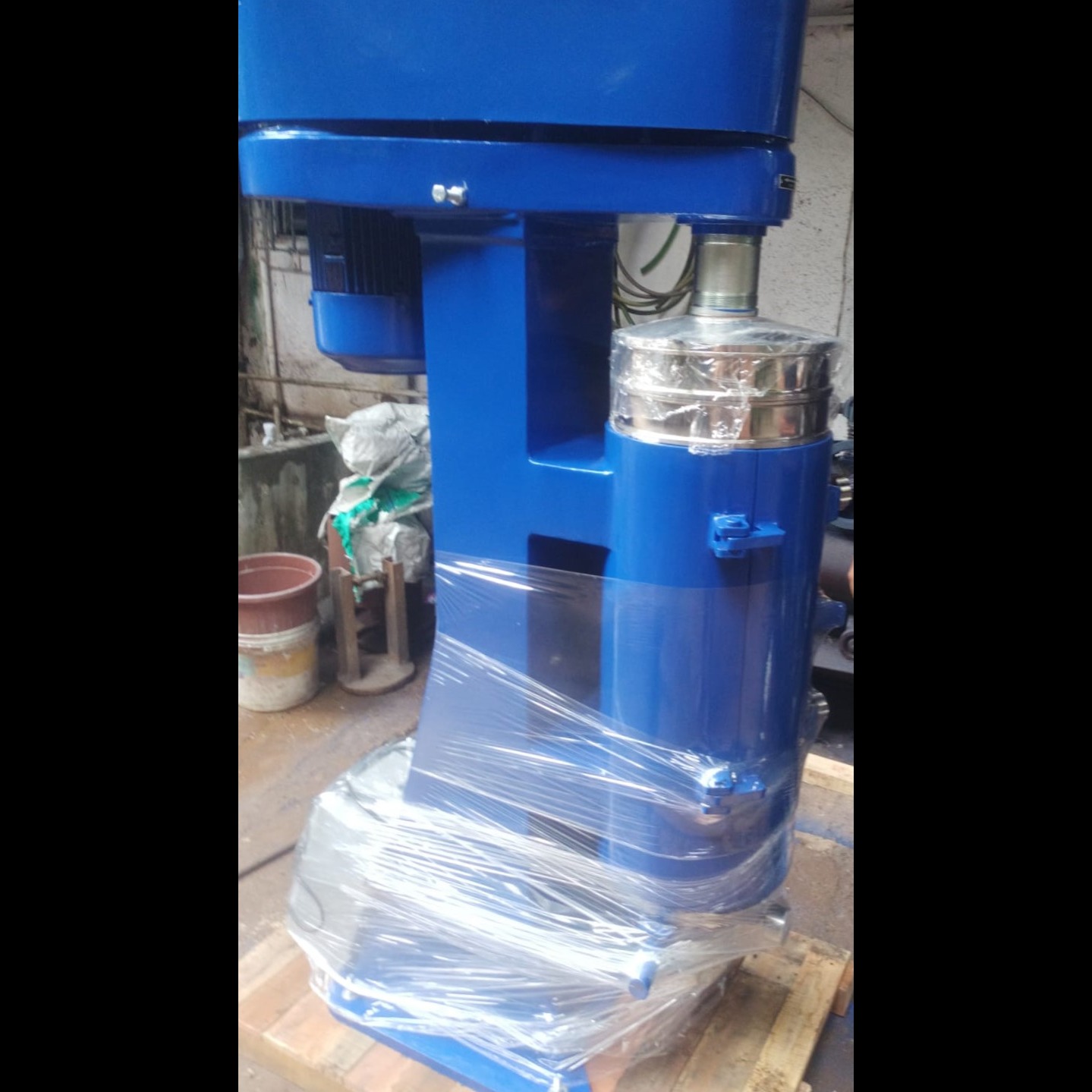
A tubular centrifuge machine (also called a tubular bowl centrifuge or high-speed tubular separator) is a type of high-speed centrifuge used for separating fine particles or immiscible liquids (such as oil and water) based on differences in their densities. It’s widely used in biotechnology, pharmaceuticals, food processing, and chemical industries for clarifying liquids or recovering biomass. 🧠 Basic Principle It operates on the principle of centrifugal force — spinning a liquid mixture at very high speeds (up to 20, 000–30, 000 rpm) in a tubular-shaped bowl. Heavier components (e.g. solids or denser liquids) move outward toward the bowl wall. Lighter components (e.g. lighter liquids) move inward toward the center and exit from a separate outlet. ⚙️ Main Components Tubular Bowl: A long, narrow, stainless-steel cylinder (typically 40–80 cm long). It rotates at high speed to generate strong centrifugal forces (up to 20, 000 × g). Inlet & Outlet System: The mixture enters from the bottom or top center. The separated liquids exit through different channels — one near the axis (light phase) and another near the wall (heavy phase). Drive Motor: Provides the rotational power. Frame & Bearings: Support the spinning bowl and ensure stable operation. Discharge System: Solids accumulate on the inner wall and must be manually cleaned after operation (unlike disk centrifuges which have automatic discharge). 🧪 Applications Biotechnology: Harvesting microbial cells, yeast, or mycelium from fermentation broth. Pharmaceuticals: Clarifying vaccines, antibiotics, and enzymes. Food & Beverages: Separating edible oils, clarifying fruit juices, milk skimming. Chemical Industry: Separation of fine suspensions or emulsions. Environmental: Wastewater clarification, algae harvesting.


This is your website preview.
Currently it only shows your basic business info. Start adding relevant business details such as description, images and products or services to gain your customers attention by using Boost 360 android app / iOS App / web portal.
# tubular centrifuge machine # highly qualified cold press virgin coconut oil machine
2025-11-10T05:07:54
A tubular centrifuge machine (also called a tubular bowl centrifuge or high-speed tubular separator) is a type of high-speed centrifuge used for separating fine particles or immiscible liquids (such as oil and water) based on differences in their densities. It’s widely used in biotechnology, pharmaceuticals, food processing, and chemical industries for clarifying liquids or recovering biomass. 🧠 Basic Principle It operates on the principle of centrifugal force — spinning a liquid mixture at very high speeds (up to 20, 000–30, 000 rpm) in a tubular-shaped bowl. Heavier components (e.g. solids or denser liquids) move outward toward the bowl wall. Lighter components (e.g. lighter liquids) move inward toward the center and exit from a separate outlet. ⚙️ Main Components Tubular Bowl: A long, narrow, stainless-steel cylinder (typically 40–80 cm long). It rotates at high speed to generate strong centrifugal forces (up to 20, 000 × g). Inlet & Outlet System: The mixture enters from the bottom or top center. The separated liquids exit through different channels — one near the axis (light phase) and another near the wall (heavy phase). Drive Motor: Provides the rotational power. Frame & Bearings: Support the spinning bowl and ensure stable operation. Discharge System: Solids accumulate on the inner wall and must be manually cleaned after operation (unlike disk centrifuges which have automatic discharge). 🧪 Applications Biotechnology: Harvesting microbial cells, yeast, or mycelium from fermentation broth. Pharmaceuticals: Clarifying vaccines, antibiotics, and enzymes. Food & Beverages: Separating edible oils, clarifying fruit juices, milk skimming. Chemical Industry: Separation of fine suspensions or emulsions. Environmental: Wastewater clarification, algae harvesting.
2025-11-10T05:07:54


Submit Your Enquiry